


Choosing the right CRM can be the difference between streamlined growth and operational bottlenecks. Odoo CRM is part of the larger Odoo suite, offering open-source flexibility, modular scalability, and deep customization for businesses with complex workflows. It’s particularly strong for organizations that want a unified system covering CRM, accounting, inventory, HR, and more. Zoho CRM, on the other hand, is a cloud-based SaaS solution designed for ease of use, quick deployment, and AI-powered automation. It caters to SMBs and enterprises that prioritize accessibility, omnichannel engagement, and cost-effective scalability.
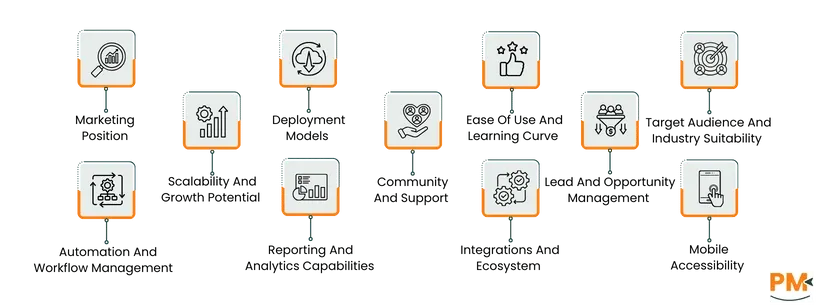
This article compares Odoo CRM and Zoho CRM across key dimensions—customization, integrations, automation, reporting, ease of use, scalability, support, and pricing—so you can decide which tool aligns best with your business needs.
Feature | Odoo CRM | Zoho CRM |
Customization | Highly flexible, open-source, modular | Configurable, SaaS-limited |
Integrations | Strong with Odoo ERP modules; technical setup needed | Native Zoho apps + wide third-party integrations |
Automation | Workflow automation; requires setup | AI-powered automation with Zia |
Reporting & Analytics | Custom dashboards, ERP-linked | Pre-built reports, predictive analytics |
Ease of Use | Steeper learning curve; IT support needed | Intuitive, quick onboarding |
Deployment Models | Cloud, on-premise, hybrid | Cloud-first SaaS |
Scalability | Modular growth across ERP apps | Tiered plans, seamless scaling |
Community & Support | Large open-source community + enterprise support | 24/7 support, tutorials, strong user forums |
Mobile Accessibility | Functional app, offline access | Feature-rich app with AI and location tools |
Pricing | Modular, pay-per-app | Tiered subscription plans |
TL;DR Verdict:
- Odoo CRM is best for mid-to-large enterprises with technical resources, complex workflows, and a need for ERP-level integration
- Zoho CRM is best for SMBs and enterprises seeking ease of use, fast deployment, and AI-driven automation

Odoo CRM is part of the broader Odoo suite, an open-source ERP and business management platform. It offers a flexible, modular approach, allowing companies to integrate CRM with accounting, inventory, HR, and other business functions. Designed for customization, Odoo CRM helps businesses manage leads, track opportunities, automate workflows, and gain insights through reporting. Its adaptability makes it appealing to organizations that want a tailored solution aligned with their processes, though it requires some technical expertise to maximize its potential.
Odoo CRM Pros And Cons
Pros | Cons |
|
|

Zoho CRM is a cloud-based customer relationship management platform designed to help businesses of all sizes streamline sales, marketing, and customer support. Known for its user-friendly interface and wide range of built-in features, Zoho CRM enables teams to manage leads, track deals, automate workflows, and engage customers across multiple channels. With AI-powered insights through its assistant ‘Zia,’ Zoho CRM offers predictive analytics and automation that enhance decision-making. Its scalability and extensive integrations make it a popular choice for SMBs and enterprises seeking a ready-to-use solution without heavy technical setup.
Zoho CRM Pros And Cons
Pros | Cons |
|
|

Odoo CRM Pricing
Plan | Price (/user/month) | Key Features |
One App Free | $0/user/month | Access to one Odoo app (e. g. , CRM) with unlimited users; hosting, support, and maintenance included. |
Standard | $11.20/user/month | Access to all Odoo apps + Free trial (CRM, Accounting, Inventory, HR, Project, etc.) ; unlimited support, hosting, and maintenance.) |
Custom | $17.00/user/month | All apps + advanced features + Free trial (Odoo Studio, Multi-Company, External API); available on Odoo Online, Odoo. sh, or on-premise.) |
Disclaimer: The pricing is subject to change.
Zoho CRM Pricing
Plan | Price (/user/month) | Key Features |
Free Edition | $0 (up to 3 users) | Basic CRM features: leads, contacts, deals, tasks; limited customization. |
Standard | $20/user/month | Sales pipeline management, scoring rules, custom dashboards, workflows, and integrations. |
Professional | $35/user/month | Inventory management, advanced automation, validation rules, and enhanced reporting. |
Enterprise | $50/user/month | Advanced customization, multi-user portals, AI assistant (Zia), advanced analytics, and territory management. |
Ultimate | $65/user/month | Full-featured plan with Zoho Analytics integration, advanced BI, unlimited customization, and premium support. |
Disclaimer: The pricing is subject to change.
Odoo CRM is best suited for mid-sized to large enterprises that require a high level of customization and integration across multiple business functions. Because Odoo is part of a broader ERP suite, it caters to organizations that want a unified system covering CRM, accounting, inventory, HR, and more. Industries such as manufacturing, logistics, retail, healthcare, and professional services benefit most from Odoo’s modular design, as they often need complex workflows tailored to their operations.
While small teams can use Odoo’s free plan for a single app, the platform truly shines when deployed across larger teams with dozens to hundreds of users, where its scalability and flexibility can be fully leveraged. Businesses with in-house IT resources or access to technical expertise are the ideal audience, as they can configure Odoo to match unique processes and compliance requirements.
Zoho CRM is designed for small to medium-sized businesses (SMBs) and growing enterprises that prioritize ease of use, quick deployment, and scalability without heavy technical overhead. Its cloud-based model makes it accessible to startups and distributed teams that need a ready-to-use CRM solution with strong sales, marketing, and customer support features. Industries such as technology, e-commerce, education, financial services, and consulting find Zoho particularly effective due to its omnichannel engagement and AI-powered automation.
Zoho CRM works well for teams ranging from just a few users to hundreds of users, thanks to its tiered subscription plans that scale with business growth. Smaller teams benefit from its intuitive interface and affordable entry-level plans, while larger organizations can unlock advanced features like predictive analytics, territory management, and deep integrations across Zoho’s ecosystem. This makes Zoho a versatile choice for businesses that want a balance of accessibility and scalability.
Both Odoo CRM and Zoho CRM are strong contenders, but the better choice depends on your organization’s priorities. Odoo CRM is the superior option for businesses that need deep customization, ERP-level integration, and control over deployment models. It shines in industries with complex workflows—such as manufacturing, logistics, and healthcare—where modular scalability is critical. On the other hand, Zoho CRM is the better performer for SMBs and enterprises seeking a cloud-based, ready-to-use solution with strong automation, AI-driven insights, and omnichannel engagement. Its ease of use and quick deployment make it ideal for teams without heavy technical resources.
Verdict: If your business values flexibility and has technical expertise, Odoo CRM may suit you better. If you prioritize accessibility, scalability, and fast adoption, Zoho CRM is likely the stronger fit.
Alternatives To Odoo CRM
Tool | Why Consider It |
NetSuite | Enterprise-grade ERP + CRM with strong scalability. |
Microsoft Dynamics 365 | Deep integration with Microsoft ecosystem; robust CRM/ERP features. |
SAP Business One | Tailored for SMEs needing ERP + CRM functionality. |
Acumatica | Cloud-based ERP with strong customization and reporting. |
Epicor | Comprehensive ERP suite with industry-specific solutions. |
Alternatives To Zoho CRM
Tool | Why Consider It |
HubSpot CRM | Free entry-level CRM with strong marketing automation. |
Salesforce | Market leader with advanced customization and enterprise scalability. |
Freshsales (Freshworks CRM) | Intuitive design, strong automation, and affordable pricing. |
Pipedrive | Sales-focused CRM with visual pipelines and ease of use. |
Microsoft Dynamics 365 | Enterprise-ready CRM with strong integrations and analytics. |