

In today’s fast-paced tech landscape, DevOps project management isn’t just a buzzword—it’s a strategic approach that drives real productivity gains. By integrating DevOps practices into project management workflows, teams can break down silos, foster tighter collaboration, and enable continuous delivery from planning through deployment. This article explores how leveraging DevOps transforms traditional project management into a seamless, efficiency-driven engine.
In this guide, you’ll discover how DevOps principles—like automated CI/CD pipelines, shared accountability, and real‑time feedback loops—empower project managers to achieve faster releases, higher quality outputs, and greater team cohesion. We’ll explain the full spectrum of benefits, from improved collaboration and accelerated delivery cycles to proactive risk management and automation best practices. Read on for a comprehensive roadmap to harness DevOps for truly effective project management.
DevOps is more than just a methodology—it’s a cultural and technical fusion that bridges development, operations, and project oversight to deliver software at speed, reliability, and quality. At its core, DevOps management removes traditional silos by encouraging shared responsibility and transparency across teams. It leverages key principles such as automation, continuous integration and continuous delivery (CI/CD), and ongoing collaboration to reimagine how projects are managed.
In practice, DevOps for project management transforms the typical phase-based workflow into an iterative, responsive lifecycle. Automation reduces manual handoffs, pipeline integration of CI/CD ensures code is built, tested, and deployed seamlessly, and continuous collaboration fosters real‑time communication among developers, operations, and project stakeholders. This alignment elevates traditional project management by accelerating delivery, enhancing product quality, and enabling teams to adapt swiftly to change—all while maintaining clear oversight and governance.
By embracing DevOps within project management, you unlock a unified, efficiency-focused model—blending the structure and accountability of PM with the velocity and resilience of modern software delivery.

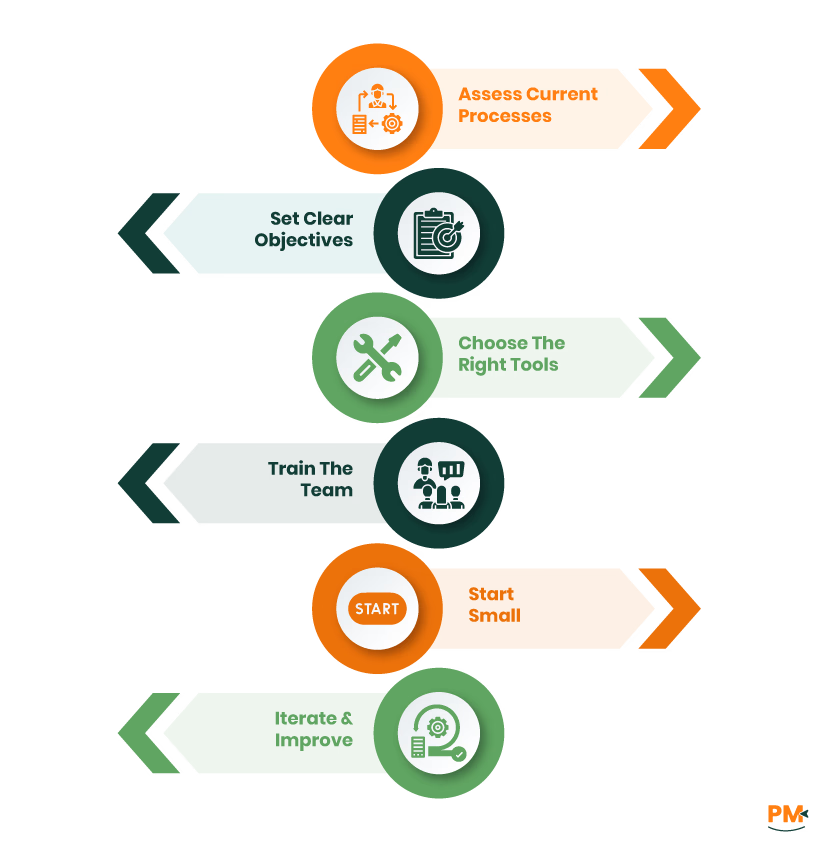
- Assess Current Processes: Begin with a thorough audit of your existing workflows—map out development, operations, and project handoffs to identify inefficiencies like manual deployments or communication gaps. Pinpointing these bottlenecks helps you target where DevOps project management can deliver meaningful impact
- Set Clear Objectives: Define SMART goals (e. g. , ‘reduce deployment lead time from four hours to one’) focused on velocity, deployment frequency, quality, or MTTR. Clear benchmarks ensure your initiative remains goal-oriented and measurable
- Choose The Right Tools: Select tooling that empowers automation, CI/CD, containerization, and orchestration. Popular options include Docker, Kubernetes, GitLab, and Azure DevOps (Boards + Pipelines). Leveraging how to use Azure DevOps for project management ensures seamless agile planning tied directly to build and release workflows
- Train The Team: Structure focused onboarding and training sessions—cover essentials like backlog grooming in Azure Boards, writing CI/CD pipelines, and container builds. Combine guided workshops with ongoing mentoring to build confidence and embed new ways of working
- Start Small: Roll out an MVP or pilot project with a motivated, cross-functional team. This ‘start small’ approach helps drive quick wins and avoid overreach, creating momentum without overwhelming your organization
- Iterate And Improve: Track key DevOps metrics such as deployment frequency, lead time for changes, change in failure rate, and mean time to recovery (MTTR)—using the DORA framework. Continuously refine pipelines and workflows based on these insights, enabling data-driven optimization
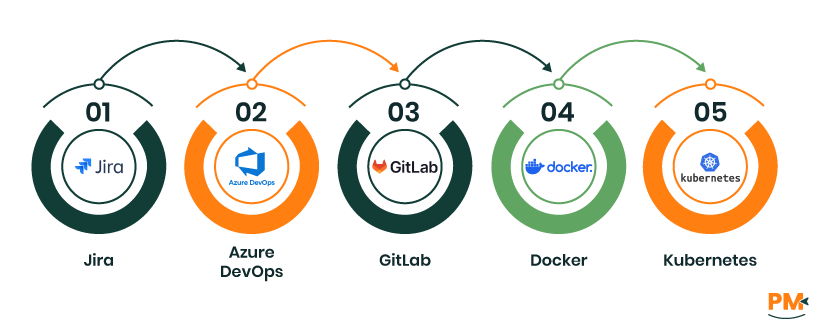
Key tools that enable DevOps project management tools are essential in bridging development, operations, and planning workflows. Here’s a curated list:
These tools, when combined, form a robust ecosystem for DevOps project management, supporting seamless collaboration, continuous delivery, and scalable operations.
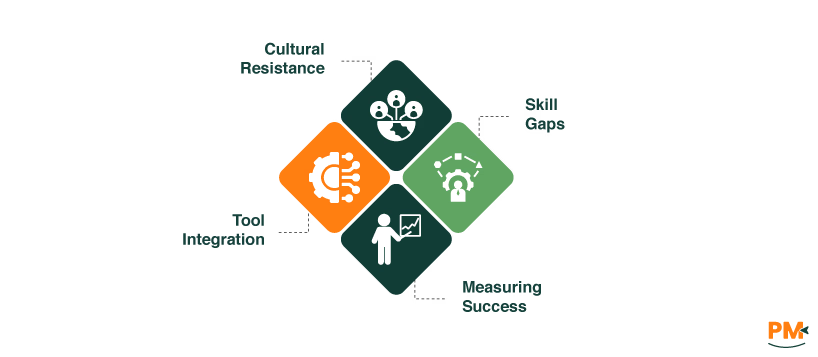
- Cultural Resistance: Organizational silos and resistance to change often hinder DevOps adoption. Counter this by fostering cross-functional team structures and promoting shared responsibility. Senior leaders must visibly endorse the shift, championing open communication, aligning priorities, and celebrating early wins to cultivate a collaborative culture
- Skill Gaps: Many teams lack hands-on skills in CI/CD, infrastructure-as-code, or observability. Close these gaps by offering structured training sessions, workshops, and certifications focused on essential DevOps competencies. Continuous upskilling builds confidence and empowers teams to own their workflows
- Tool Integration: Toolchain fragmentation can disrupt pipelines. Solve this by selecting interoperable tools and using APIs or integration platforms to connect repositories, CI/CD engines, monitoring, and PM systems. Centralizing data—especially via unified dashboards—simplifies orchestration and avoids inefficiencies
- Measuring Success: Without clear metrics, success is intangible. Define meaningful KPIs—such as deployment frequency, change lead time, MTTR, and defect rate—then monitor them regularly. Use these insights to iterate on processes, identify bottlenecks, and align efforts with organizational goals
Continuous Integration (CI)

Continuous Integration means developers merge code frequently into a shared repository where automated builds and tests run on every change. This practice ensures early bug detection, prevents chaotic integration efforts, and provides rapid feedback, benefits PMI describes as ‘a high-quality working solution safely in small, regular steps.’
CI keeps the codebase in a deployable state, enabling PMs to track integration health and enforce standards efficiently. It’s also a great foundation for DevOps projects for practice, helping teams build hands-on experience with automation, testing, and deployment pipelines in real-time scenarios.
Continuous Delivery (CD)
Continuous Delivery automates pipelines, so every validated build is ready for deployment at any time. It complements CI by reducing manual release steps, improving reliability, and accelerating time to market, resulting in frequent, risk-free releases. PMs should oversee pipeline triggers and release readiness to maintain delivery momentum.
Infrastructure As Code (IaC)

Infrastructure as Code uses declarative configurations (e. g. , Terraform, PowerShell DSC) to provision and manage environments like code. This practice ensures consistency, version control, and scalability while minimizing manual errors. PMs should incorporate IaC templates into CI/CD pipelines and enforce infrastructure changes via code reviews and versioning tools.
Monitoring And Logging

Monitoring and logging deliver real-time visibility across the delivery pipeline and live systems, a core DevOps best practice per Atlassian. By integrating alerts, dashboards, and telemetry into CI, test, and production stages, PMs enable proactive problem detection and foster data-driven improvements. Project managers should define observability standards and regularly review metrics during sprint retrospectives.
What is the role of a project manager in a DevOps environment?
A project manager in a DevOps environment coordinates cross-team collaboration, ensures timelines and objectives align, and supports continuous delivery practices. They serve as a conduit between development and operations, reinforcing DevOps project management goals like velocity and quality.
How does DevOps differ from traditional project management?
DevOps is iterative and emphasizes continuous integration, delivery, and feedback, while traditional project management often follows linear, siloed phases. Using DevOps for project management enables faster delivery cycles, real-time feedback loops, and tighter cross-functional teamwork, making it more adaptive to change compared to traditional methods.
Can DevOps be applied to non-software projects?
Yes! DevOps for project managers goes beyond software development; its principles, like automation, cross-functional collaboration, and iterative improvement, benefit non-software initiatives just as effectively. These practices enhance efficiency and adaptability across diverse project types.
What are the initial steps to adopt DevOps in project management?
Begin by auditing your current process to identify manual handoffs or delays, then set clear objectives and launch a small pilot project to test DevOps workflows. This MVP-first strategy follows known best practices for successful DevOps project management adoption.
How do I measure the success of DevOps integration?
Use DORA metrics—deployment frequency, lead time for changes, change failure rate, and mean time to restore—to quantify improvements in speed and reliability. These KPIs provide a data-driven framework to track and optimize DevOps project management.