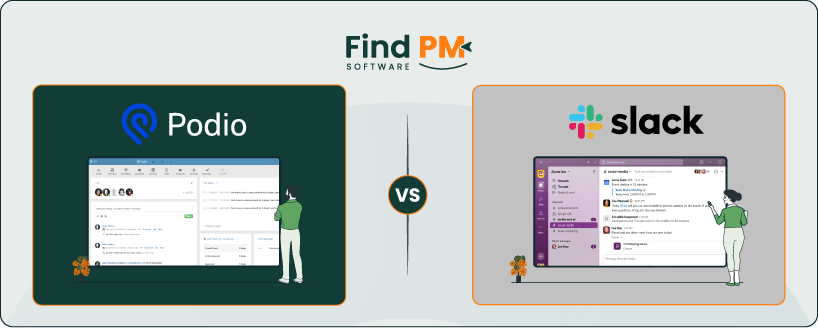
Choosing the right digital workspace can directly impact how efficiently your team communicates and manages projects. Podio is a project management and collaboration platform built to adapt to different business needs. It provides customizable workspaces, structured task tracking, and workflow automation, making it a strong choice for organizations that rely on detailed project oversight.
Meanwhile, Slack has established itself as a leading communication hub for modern teams. Its channel-based messaging, quick file sharing, and thousands of third-party integrations position it as an alternative to scattered email threads and disconnected tools.
Although both platforms are designed to improve productivity, they approach it from different angles: Podio, with its project and task-centric framework, and Slack, with real-time messaging and integrations. This article compares their features, pricing, and usability, enabling you to determine which option fits best for your team’s daily operations and long-term goals.
Features
Podio
Slack
Core Functionality
Project management and workflow automation
Real-time messaging and team communication
Task Management
Advanced customizable workflows
Limited (via integrations, not native)
Communication
Built-in chat, comments, and collaboration
Channels, DMs, video/audio calls
File Sharing
Upload, store, and link files to tasks/projects
Share files directly in channels and DMs
Integrations
100+ integrations including CRM and PM apps
2,600+ integrations with productivity tools
AI & Automation
Workflow automation and app builder
Workflow automation via Slackbot and integrations
Cross-Platform Support
Web, iOS, Android
Web, iOS, Android, Windows, Mac
Pricing Model
Starts form free plan + paid tiers for advanced features
Free plan + tiered paid options (/user/month)
Podio is better suited for teams needing structured project and task management with customizable workflows, while Slack excels in seamless communication and integrations.
Podio Overview
Podio, developed by Citrix, is a project management and collaboration software designed to help teams structure their workflows with flexibility and efficiency. Unlike rigid tools, Podio allows organizations to build customized workspaces where projects, tasks, and conversations can be managed in one place. Its strength lies in combining communication, task tracking, and data organization into a single hub, giving teams greater control over how they run projects.
Users can create automated workflows, connect external apps, and assign responsibilities directly within the platform, making it highly adaptable for businesses of different sizes. Podio is particularly beneficial for teams seeking tailored project setups that reflect their processes rather than adjusting to predefined templates.
Podio Pros And Cons
Pros
Cons
Highly customizable workflows and apps
Centralizes tasks, projects, and communication
Strong workflow automation support
Custom layout setup isn’t always intuitive
Limited advanced reporting options
Slack Overview
Slack is a widely used team communication and collaboration platform that organizes conversations into channels, direct messages (DMs), and group chats, allowing for both real-time and asynchronous interactions. It serves as a unified hub, bringing together messaging, file sharing, notifications, and external tools so that teams can stay aligned, reduce email overload, and centralize work.
Slack supports rich integrations; over 2,600 apps, and includes features like ‘Workflow Builder,’ AI-powered search, and Slack Connect for working with external partners. It also emphasizes security and compliance, aiming to give teams confidence that their data and communication can be managed safely.
Slack Pros And Cons
Pros
Cons
Excellent team collaboration across remote and hybrid teams
Real-time and asynchronous messaging with channels
Smart workflow Builder for simple automation tasks
External user permissions lack fine-grained controls
Threads are sometimes hard to track amid activity
Calling And Communication Features
Podio provides built-in chat, audio, and video calling to keep teams connected. Users can post updates, comment on tasks, and share files within workspaces. For advanced calling, integrations such as smrtPhone, JustCall, and Kixie enable click-to-call, texting, call logging, and power dialing directly from Podio.
Slack centers on real-time messaging through channels and direct messages. Its Huddles feature allows quick drop-in audio conversations, while voice and video calls (with screen sharing) are supported for one-to-one or group interactions. Slack also integrates with external calling apps, making it flexible for both casual and formal communication needs.
Winner: Slack wins for calling and communication features due to its seamless real-time messaging, Huddles for quick audio/video drop-ins, integrated screen sharing, and extensive third-party calling app support.
AI And Automation Features
Podio emphasizes automation through its Podio Workflow Automation (PWA) tool. It enables users to establish rules and triggers that automate routine tasks, such as assigning responsibilities, updating fields, or sending notifications when specific conditions are met. This reduces manual oversight and keeps projects moving seamlessly. Podio’s automation is highly customizable, allowing teams to tailor workflows to match unique processes, but it requires some setup and may feel more advanced for new users.
Slack doesn’t market itself as an automation-first tool, but it integrates well with bots and workflows to simplify daily communication tasks. Its Workflow Builder lets users create automated sequences, like onboarding messages for new members, reminders for recurring tasks, or form submissions that feed directly into channels. Additionally, AI-driven search and smart suggestions make it easier to quickly find past conversations and relevant files. Slack’s automation focuses more on streamlining communication than managing the entire project process.
Winner: Podio wins, for its advanced and customizable automation capabilities, offering deeper control over workflows compared to Slack’s lighter, communication-centered automations.
Podio is designed with structured task and workflow management in mind. It enables users to create, assign, and track tasks directly within custom workspaces, making it easier to link them with related projects or deliverables. Teams can automate repetitive steps using Podio Workflow Automation, ensuring task dependencies are handled without manual effort. With customizable views, checklists, and status tracking, Podio works well for project-heavy teams that need visibility into both individual tasks and the broader workflow.
Slack is not a traditional task management system but integrates lightweight task functions within its communication channels. Using Slack’s reminders and to-do features, team members can stay on top of deadlines without leaving the app. More robust workflow management comes through integrations with tools like Asana, Trello, or ClickUp, allowing tasks to be created and updated directly from Slack conversations. This makes Slack useful for task coordination, though it works best when paired with a dedicated project management tool.
Winner: Podio wins this round for its structured and customizable task management framework. It provides built-in tools for task creation, tracking, and automation—capabilities that Slack only achieves through third-party integrations.
Customer Support
Podio provides customer support primarily through its Help Center, which includes detailed guides, FAQs, and community forums where users share solutions. For direct assistance, Podio offers ticket-based support for paid plans, but response times may vary depending on the subscription level. While the documentation is comprehensive, live support options such as phone or chat are limited, making Podio better suited for teams comfortable with self-service troubleshooting.
Slack offers multiple layers of customer support, including a robust knowledge base, community forums, and in-app help resources. Paid users get access to 24/7 support via ticketing, with priority support available on higher-tier plans. Slack also provides customer success programs and onboarding resources for enterprises. This combination of self-help tools and responsive direct support makes Slack a reliable choice for organizations that value quick resolution and hands-on assistance.
Winner: Slack wins for its stronger customer support system. It offers 24/7 ticket-based assistance, priority response for higher tiers, and dedicated success programs—far exceeding Podio’s primarily self-service model.
Collaboration Functionality
Podio enables collaboration through customizable workspaces, where teams can create apps to match their workflows. Members can comment directly on tasks, projects, and deliverables, keeping discussions tied to relevant work items. File attachments, shared calendars, and activity streams further strengthen collaboration by consolidating updates in one place. This structured approach makes Podio ideal for project-driven environments that need detailed collaboration around ongoing work.
Slack is designed around real-time communication and collaboration. Its channels, direct messaging, and huddles allow teams to interact instantly, whether in group discussions or one-on-one. Collaboration extends through integrations with tools like Google Drive, Dropbox, and project management apps, enabling file sharing and updates without switching platforms. Slack’s informal and flexible collaboration style is well-suited to teams that prioritize fast, dynamic communication over structured workflows.
Winner: Slack takes the lead for collaboration with its real-time communication, huddles, and extensive integrations. It offers faster, more fluid teamwork compared to Podio’s structured, project-based collaboration model.
File Sharing Capabilities
Podio allows teams to upload, store, and share files within tasks, projects, or custom apps. Files can be attached directly to deliverables, ensuring that documentation remains tied to specific work contexts. Integration with third-party services like Google Drive, Dropbox, and Box extends storage options and makes it easier to collaborate on shared documents. This setup provides both flexibility and organization, particularly for project-heavy teams needing files linked to workflows.
Slack emphasizes quick and seamless file sharing through its channels and direct messages. Users can drag-and-drop documents, images, and videos directly into conversations, where they are instantly searchable. Slack also integrates with cloud storage services like Google Drive, OneDrive, and Dropbox, allowing teams to share live document links without duplication. Its real strength lies in making file exchange a natural part of ongoing conversations, reducing delays in collaboration.
Winner: Slack wins for its effortless, real-time file sharing and deep integrations with major cloud platforms. Its seamless in-chat uploads and instant searchability make collaboration faster and more fluid than Podio’s structured approach.
Cross-platform Support
Podio is accessible via web browsers, desktop apps, and mobile apps (iOS and Android). Its mobile application allows users to manage tasks, collaborate, and check project updates on the go, though some advanced customization features are better suited for desktop use. The consistent syncing across platforms ensures that updates made in one environment reflect instantly across others, making it reliable for distributed teams.
Slack provides extensive cross-platform support with apps for Windows, macOS, Linux, iOS, and Android, alongside a fully functional web version. Its mobile app mirrors desktop features closely, allowing users to join huddles, share files, and respond to messages without losing functionality. Notifications sync intelligently across devices, ensuring that users are not overwhelmed with duplicate alerts. This makes Slack a strong option for teams that switch frequently between devices.
Winner: Slack wins for cross-platform support due to its broader device coverage, consistent feature parity across mobile and desktop, and intelligent notifications that keep teams connected seamlessly.
Ease Of Use And UI
Podio offers a customizable and modular interface, giving teams the ability to design workspaces that match their processes. This flexibility allows for tailored project management setups but can feel complex for first-time users. Once configured, the platform provides a clean, organized layout where tasks, files, and discussions are centralized. Podio’s UI appeals to teams that value control and customization over plug-and-play simplicity.
Slack’s design prioritizes simplicity and immediacy, centering around channels, direct messages, and sidebars for quick navigation. The interface is highly intuitive, requiring little to no onboarding for new users. Features like huddles, threads, and app integrations are seamlessly woven into the layout, ensuring communication remains fluid without overwhelming users. Slack’s polished and minimal UI makes it especially appealing for fast-moving teams that want to start collaborating right away.
Winner: Slack wins for ease of use and UI. Its intuitive, minimal design and seamless navigation allow teams to get started quickly, while Podio’s highly customizable interface can feel complex for new users.
External Integration Capabilities
Podio integrates with popular tools like Dropbox, Google Drive, Microsoft Exchange, and Zendesk, enabling teams to link external data with their projects. The Podio API allows developers to build custom integrations, making it highly adaptable for businesses with specific needs. Security features such as user permissions and workspace controls also ensure files and messages shared through integrations remain safe. This flexibility makes Podio suitable for teams that need both structure and connectivity with third-party apps.
Slack is known for its extensive integration ecosystem, offering more than 2,600 apps in the Slack App Directory. It connects seamlessly with tools like Google Workspace, Microsoft Teams, Salesforce, Trello, and Asana, making it a central hub for collaboration. Slack’s security protocols—including enterprise-grade encryption and compliance certifications—ensure that integrated apps do not compromise data safety. This robust integration capability is one of Slack’s strongest differentiators, especially for teams already relying on multiple external systems.
Winner: Slack wins for external integrations due to its vast ecosystem of over 2,600 apps, seamless connections with major business tools, and enterprise-grade security, offering greater flexibility than Podio.
Reporting And Analytics Capabilities
Podio includes reporting and visualization tools that help teams track progress across projects, tasks, and workflows. Users can create custom reports to measure productivity, project timelines, or resource allocation, tailoring analytics to fit organizational needs. These insights allow managers to identify bottlenecks and optimize processes. Podio’s reporting is well-suited for project-driven teams that require structured performance tracking.
Slack provides analytics centered on communication and engagement. Admins can view usage statistics, such as active members, message volume, and integration adoption, to understand how teams interact on the platform. Higher-tier plans include deeper analytics, helping organizations measure collaboration trends and identify opportunities for improving engagement. While not a substitute for full project analytics, Slack’s data is valuable for assessing communication efficiency.
Winner: Podio takes the lead for reporting and analytics. Its tools offer in-depth, customizable project and workflow tracking, giving managers actionable insights—whereas Slack focuses primarily on communication metrics.
Podio Vs Slack Pricing Comparison
Pricing plays a central role in selecting project management software, as the right plan should balance features with affordability for growing teams.
Podio Pricing
Plan
Price (/user/month)
Key Features Included
Free
$0
Up to 5 employees; basic apps, workspaces, task management
Plus
$14
Unlimited items, user management, automated workflows, light user role, read-only access
Premium
$24
All Plus features + visual reports, dashboards, advanced workflow automation, cloud phone & power dialer
Slack Pricing
Plan
Price (/user/month)
Key Features Included
Free
$0
90 days message history, up to 10 apps, 1:1 external messaging, basic features
Pro
$8.75
Unlimited message history, unlimited integrations, group meetings, advanced AI features
Business+
$15
All Pro features + deeper analytics, enhanced security, advanced Slack AI features
Enterprise
Contact sales
Enterprise-grade features, customizable contracts, advanced admin, and compliance
Podio follows a per-employee pricing model with a free plan for small teams, while its premium option includes advanced tools like automation and analytics. Slack also offers a free tier, but with limits on message history and integrations, with higher plans removing restrictions and catering to larger organizations. When budgeting, teams should consider whether they need Podio’s project management depth or Slack’s stronger communication features.
Who Is Podio Best For?
Podio is well-suited for small to medium-sized teams that prioritize customization in their project management workflows. Its modular structure allows businesses to design workspaces and apps that align closely with their processes, making it particularly valuable for creative agencies, consultancies, and organizations with complex project structures. While Podio can scale to larger enterprises, it shines most in environments where flexibility and tailored workflows are more important than out-of-the-box simplicity. Teams that want to centralize communication, file sharing, and task management under one adaptable platform often find Podio a strong fit.
Who Is Slack Best For?
Slack is an excellent choice for teams of all sizes that depend heavily on fast and seamless communication. Its intuitive messaging system and extensive integrations make it especially effective for distributed teams, tech companies, and organizations where real-time collaboration is essential. From small startups to large enterprises, Slack scales well to accommodate thousands of users while maintaining efficiency. Industries that rely on continuous communication—such as technology, media, and customer support—often benefit most from Slack’s collaborative environment. For teams looking to centralize discussions and reduce email dependency, Slack offers a streamlined solution.
Which One May Suit Your Needs Better?
When comparing both platforms, the decision largely depends on your team’s priorities. Podio is best if you need a highly customizable project management tool that adapts to complex workflows and provides flexibility in structuring tasks. It appeals to teams that want project management and collaboration features in one place.
On the other hand, Slack stands out as a communication-first platform that enhances collaboration through real-time messaging and integrations with countless business tools. If your focus is efficient communication across teams of any size, Slack may be the stronger choice. For those who value structured workflows and project tracking, Podio may be more suitable.
What Are The Alternatives?
If Podio or Slack don’t seem like the right fit, there are several other project management and collaboration tools worth considering. These alternatives may better align with different team sizes, industries, or workflow preferences.
Podio Alternatives
Teams looking for options similar to Podio may benefit from these platforms:
Asana: A popular project management tool with strong task tracking and workflow visualization features.
Trello : A board-based solution ideal for simple task management and visual collaboration.
Monday. com: A versatile platform offering customizable workflows and project tracking for teams of all sizes.
ClickUp : A comprehensive solution with built-in project management, task tracking, and automation features.
Slack Alternatives
For those who find Slack’s communication focus too limiting or prefer different styles of collaboration, here are strong alternatives:
Microsoft Teams: Offers chat, video conferencing, and deep integration with Office 365 tools.
Google Chat: A straightforward messaging platform integrated with Google Workspace for seamless collaboration.
Discord: Originally designed for communities, now widely used by teams for real-time communication and voice chat.
Mattermost: An open-source alternative that emphasizes security and customization for communication workflows.
Ashar Ahmad is the Content Team Lead for the HR category at Software Finder. With over seven years of experience in content writing, he has gone through the paces to prove himself. As someone who understands the unique perspective the readers are looking for and the pain points of writers trying to craft that well-written piece, he now mentors others to enlighten the readers. Outside of work, you will probably find Ashar playing games, being tormented by his cat, tending to his fruit garden, or building keyboards just so he can write more.
Share this Article
Sign Up
Sign up to stay updated with the new content and expand your HR expertise.
Ashar Ahmad is the Content Team Lead for the HR category at Software Finder. With over seven years of experience in content writing, he has gone through the paces to prove himself. As someone who understands the unique perspective the readers are looking for and the pain points of writers trying to craft that well-written piece, he now mentors others to enlighten the readers. Outside of work, you will probably find Ashar playing games, being tormented by his cat, tending to his fruit garden, or building keyboards just so he can write more.